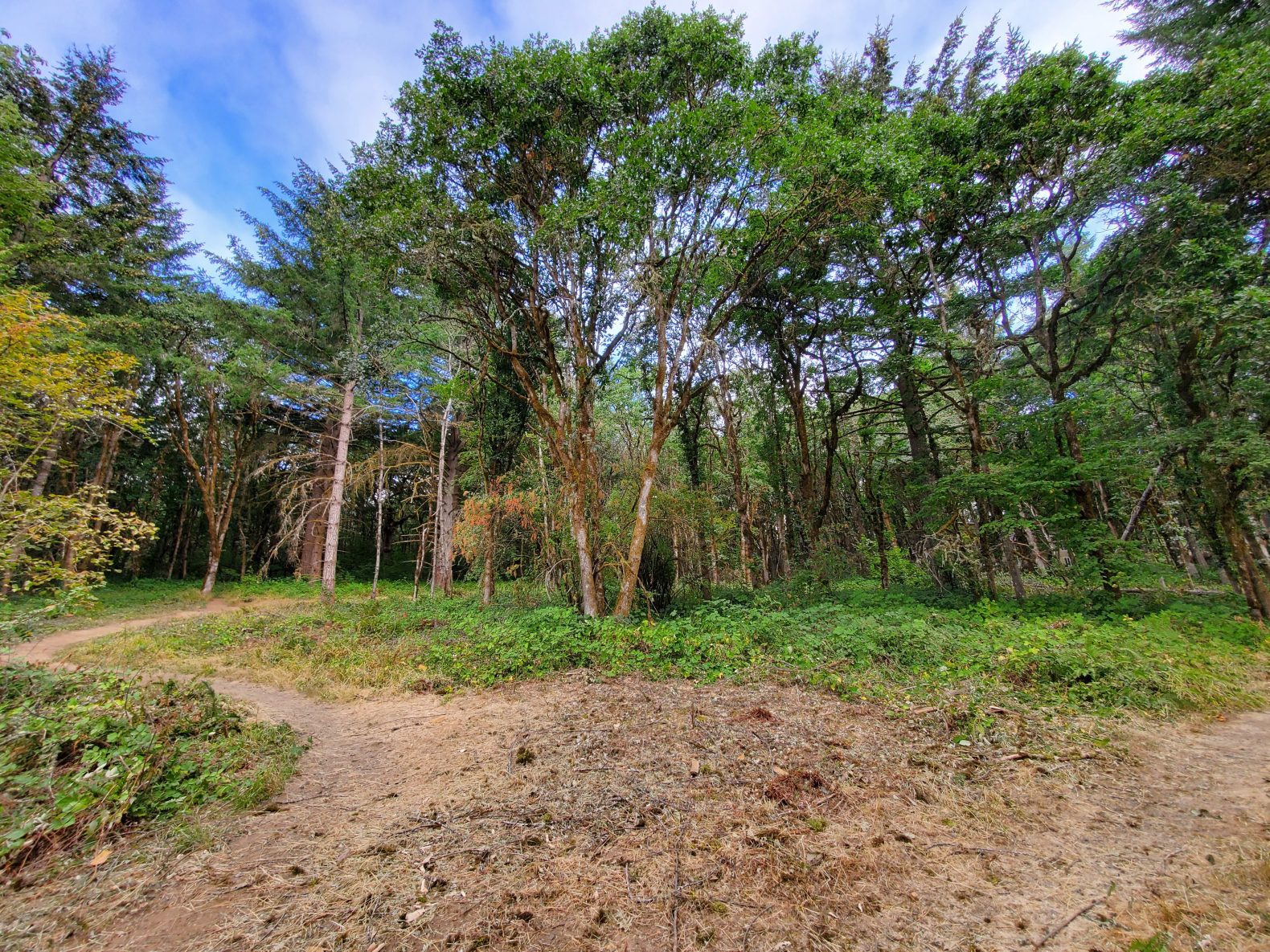
Prairie & Oak Savanna

Council staff and contractors remove vegetation encroaching on prairie sites. In the absence of widespread seasonal burning, trees like Douglas firs will encroach on prairie and savannah sites. Tall, non-native grasses and shrubs crowd out the nectar-rich, native wildflowers favored by listed butterflies, and those are controlled by mowing and judicious use of herbicides. We work with local landowners to re-introduce important nectar species like Kincaid’s lupine.
Prairie restoration and protection helps reduce butterfly habitat isolation and fragmentation. The Watershed Council works with private landowners to build prairie corridors that link conservation sites, providing an avenue for isolated populations of prairie dependent species to thrive.
Working with the US Fish & Wildlife Service Partners for Fish & Wildlife Program, we support private landowners in expanding and maintaining prairie habitats for the threatened Fender’s blue and Taylor’s checkerspot butterflies in our Wren Prairie Restoration Area.
Wren Nectar Network Prairie Enhancements
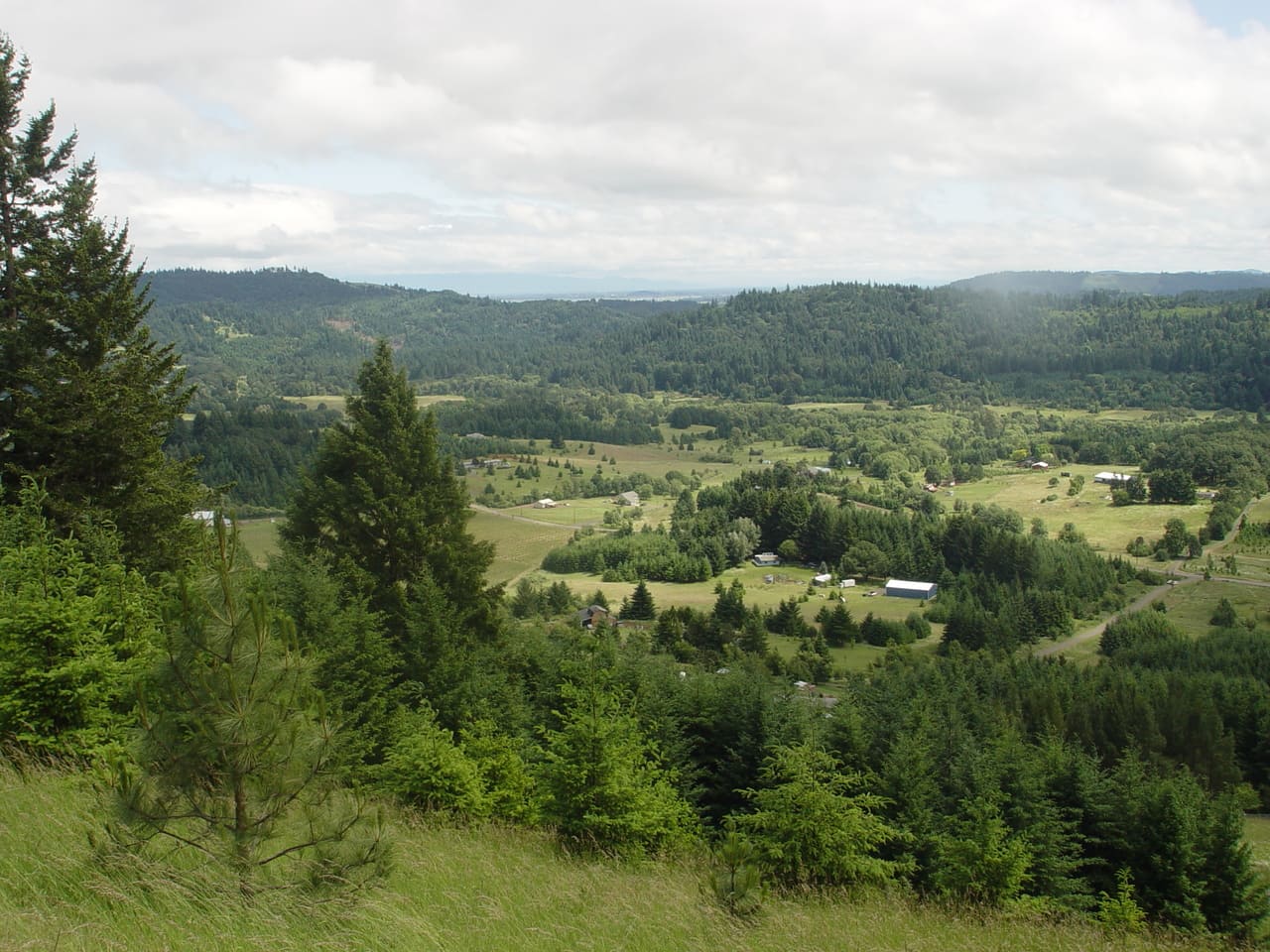
The Habitat
The Wren Community is located in the Marys River watershed and the transitional area between the Coast Range and Willamette Valley lowlands. The region supports native oak savanna ecosystems. Oak Savannas became significantly rarer after the Willamette Valley was developed and seasonal burns were suppressed. Researchers estimate that only about 2% of the historic Oak Savanna ecosystem remains. High quality habitat fragments are often small and separated by areas of human development and forests. Populations of plants and animals in habitat fragments are often smaller and more fragile than those with larger ranges. Reconnecting prairie fragments can increase the range available to native species and allow genetic mixing and dispersal which increases the viability of previously isolated populations.
Both the Fender’s Blue Butterfly and the Kincaid’s lupine are federally listed under the Endangered Species Act. The Kincaid’s Lupine is the Fender’s Blue Butterflies primary host plant and is required for butterfly populations to thrive. The Butterfly is only found in the Willamette Valley and was presumed extinct until the rediscovery of small populations in the 1990’s. After rediscovery incredible effort was put into its conservation and reintroduction into historic habitats. butterfly populations have grown from around 4000 individuals in the 2000’s to more than 30,000 but still only occupy a fraction of their historic prairie habitat.
Prairie Restoration
Wren Nectar Network Prairie Enhancement projects range from coordinating and connecting with local landowners to planting endangered Kincaid’s lupine and other native prairie species. The Watershed council assists with research and monitoring of Kincaid’s lupine patches and Fender’s Blue Butterfly populations to ensure population health. Noxious weeds were mechanically removed and encroaching trees were selectively thinned to ensure the connectivity and persistence of remaining habitat. Field trips hosted by the Watershed Council in the Wren Prairie Restoration Area bring students into nature to learn about local habitats and ecosystem conservation.
Bonneville Power Administrations power line cuts provide flyways for the Fender’s Blue Butterfly and the Taylor’s Checkerspot Butterfly. Continued maintenance of the areas around the power lines allows the butterflies to persist in the area and move between suitable neighboring habitats. The institute for Applied Ecology monitors each species with a focus on the Taylor’s Checkerspot and conducts restoration and conservation research on Willamette Valley prairie habitats. Work by the Watershed Councils, private landowners, agencies, and other environmental nonprofits in the Willamette Valley led to the downlisting of the Fender’s Blue Butterfly from endangered to threatened on the Endangered Species List.

Witham Hill Natural Area
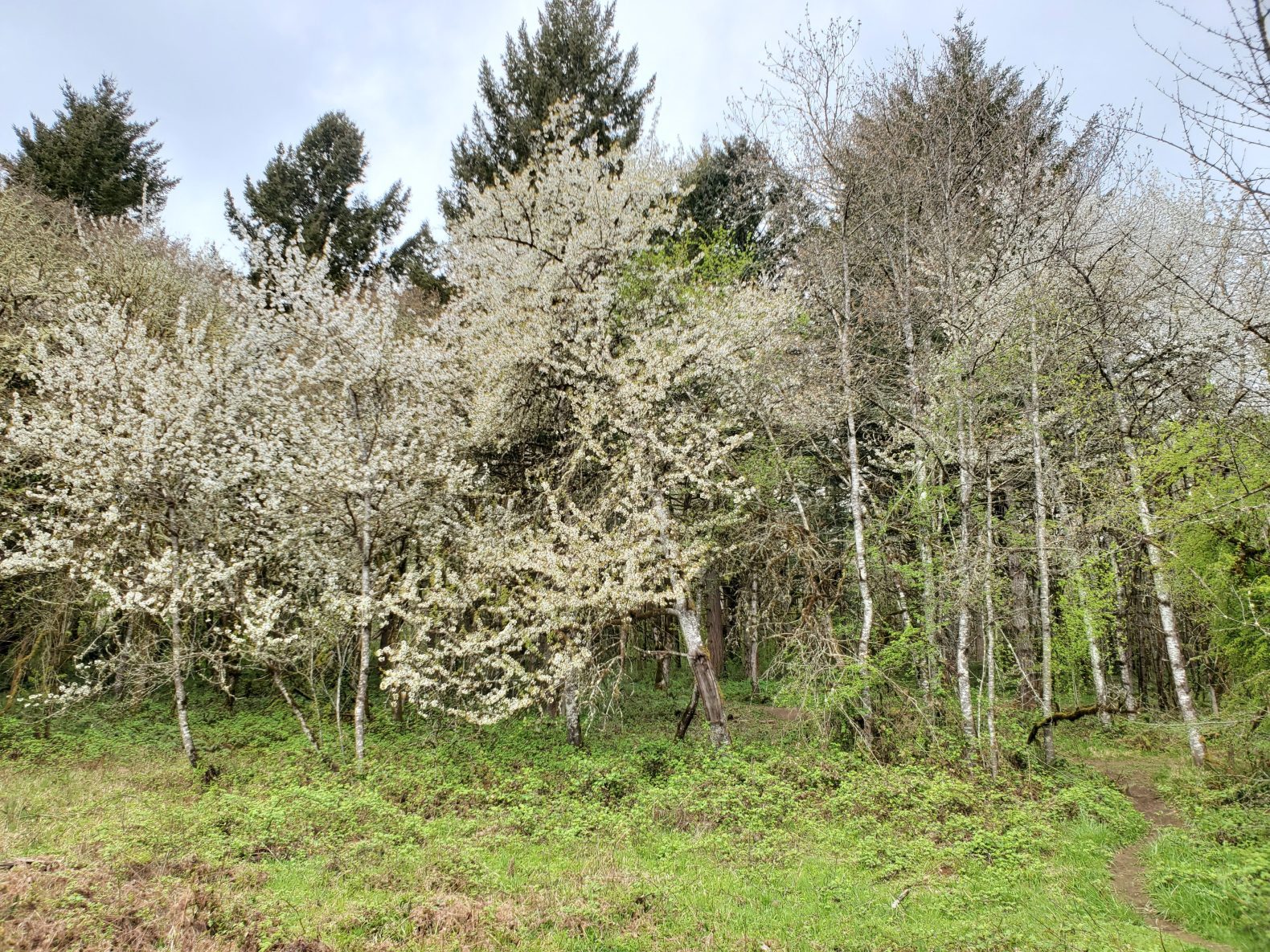
Current Site Conditions
Witham Hill Natural Area is a city park located on the Western edge of Corvallis in the Oak Creek subbasin of the Marys River watershed. Corvallis Parks and Rec completed a management plan for the natural area in 2022 where they evaluated past and present site conditions and established goals for the future management of the park. Historically the natural area was mostly Oak Savanna with some wet and upland prairie habitats. As historic disturbance patterns ceased in the area and invasives were introduced the forest canopy has closed and invasive plants have crowded out natives.
Invasive trees in the area include bird cherry, English hawthorn, English holly, English laurel, and feral apple trees. These trees crowd out native undergrowth and suppress recruitment of young native trees that should be growing to cycle in and replace the aging overstory. Some of the mature invasives trees are also directly competing with the mature oaks for space and sunlight.
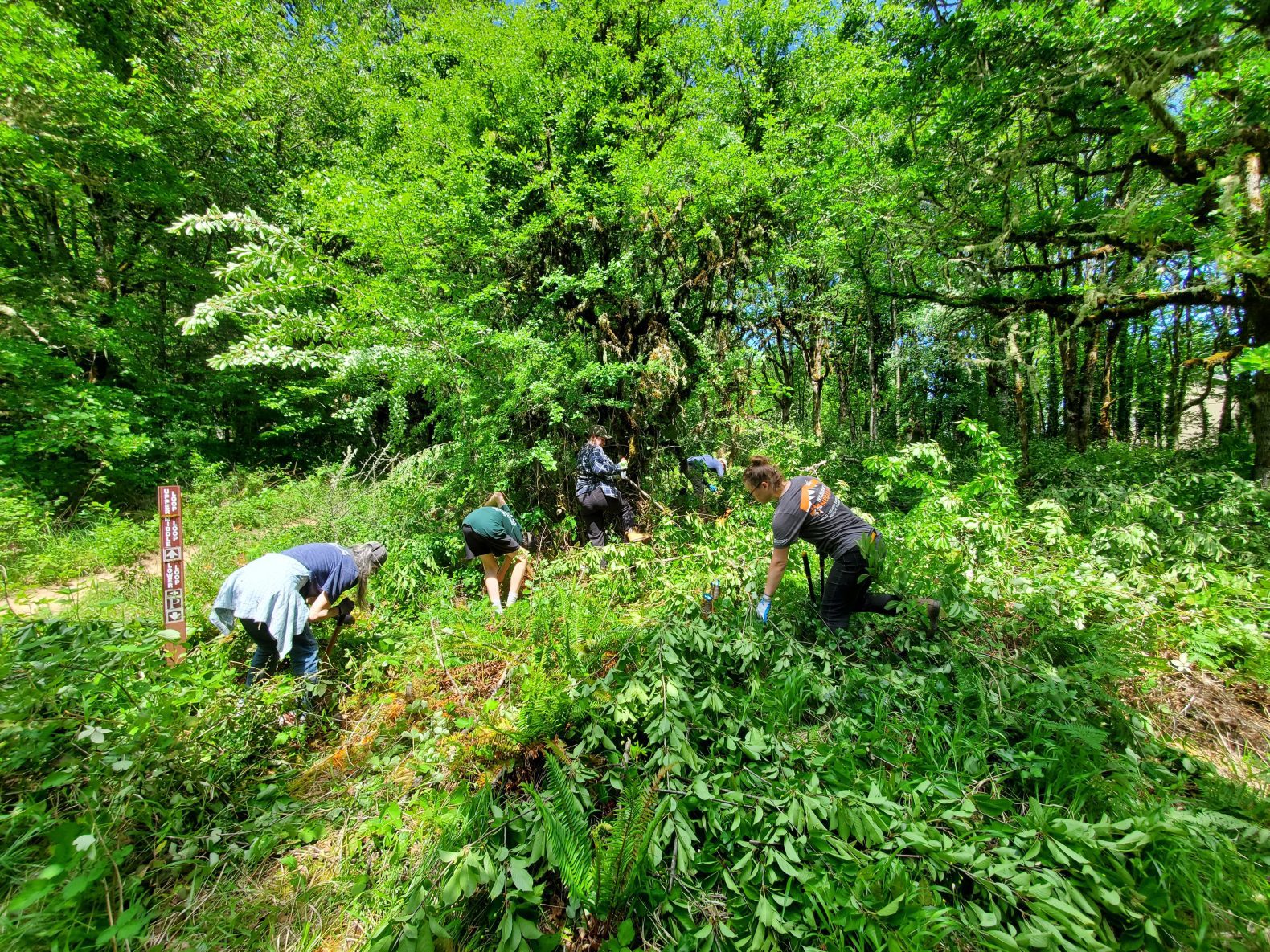
The Marys River Watershed Council is partnering with Corvallis Parks and Recreation to restore desirable plant communities in the park. We are participating in thinning invasive trees to clear the canopy and allow for increased growth of natives. Spaces left after the invasive trees are removed allow the recruitment of young oaks and stop old growth oaks in the area from having to compete for resources and canopy space.
Future Management
In the future forest planners will be able to make management and thinning decisions that encourage diverse and healthy populations of plants that will support healthy ecosystems. The Watershed Council has worked with the City of Corvallis and other partners to remove invasive trees on 5.5 acres of the park, removal of fire fuels to reduce fire risk, tree ivy and scotch broom removal where necessary in the park.