RESTORATION DICTIONARY

Fish Passage
Fish passage barriers for cutthroat trout and Pacific lamprey are identified through Rapid Bio-Assessments, by the Benton County Fish Passage Project, or by local biologists and landowners. Barriers are addressed before in-stream habitat is improved. Priorities are those barriers that block all passage upstream to winter spawning and summer cool water refuge.
Most of the barriers we address are undersized and perched road culverts, and occasionally a small irrigation dam. Most culverts are replaced, but if the “perch” is small and the culvert otherwise in good condition, we may back-water the culvert with large wood or a boulder riffle.
In-Stream
In-stream projects are designed to restore stream function by capturing gravels, increasing off-channel habitat, and increasing channel complexity.
Our primary approach is to slow water down by adding roughness — either accumulations of large wood or arrangements of boulders. Strategic placement of large wood or boulders leads to gravel accumulation and sorting, increase in stream bed elevation leading to better connectivity to the floodplain, and back-watering of off-channel habitats such as side channels and alcoves.


Ponds & Wetlands
Ponds and wetlands are essential habitats for a variety of northwest plants and animals, including red-legged frogs, Northwest pond turtles, as well as birds and insects. Marys River Watershed Council improves or restores pond and wetland habitats working with landowners and the US Fish and Wildlife Service Partners for Fish and Wildlife Program. Restoration activities include improving hydrologic connectivity, removing invasive plants, grading pond slopes to provide turtles ready access to nesting habitat, and providing basking habitats.
Prairie & Oak Savanna
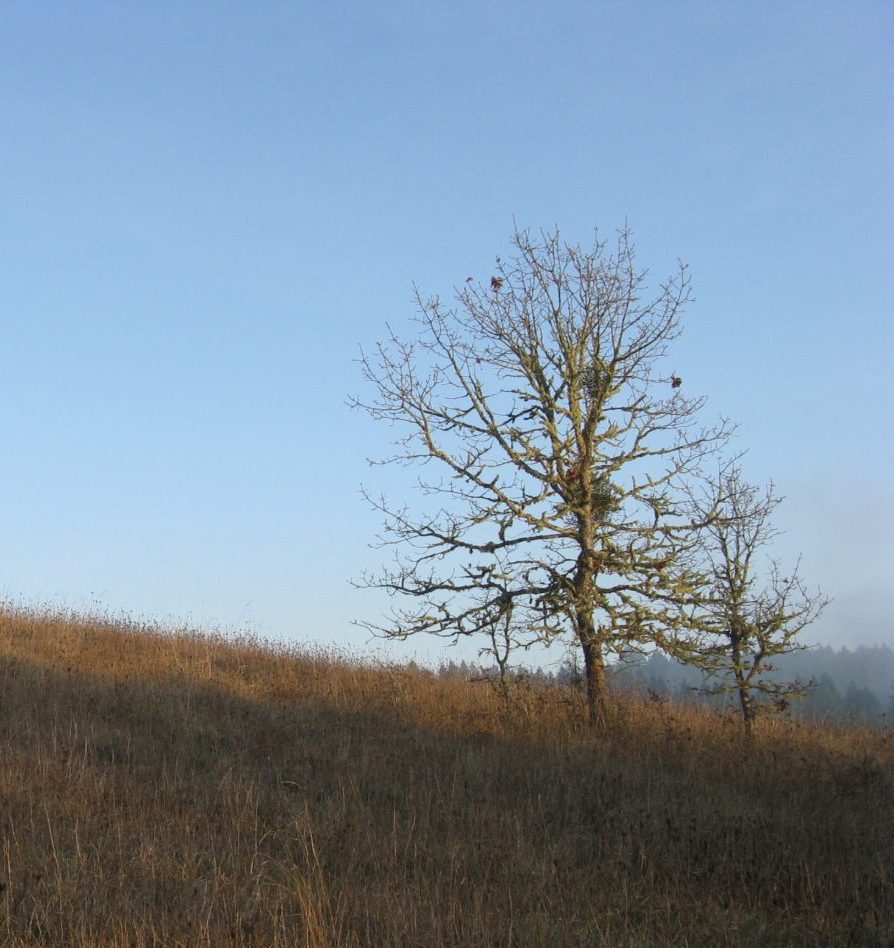
In the absence of widespread seasonal burning, which was historically done by the Kalapuya people who inhabited the Willamette Valley, trees like Douglas fir encroach on prairie and savannah sites. These coniferous trees outcompete the oaks and reduce their habitat. Tall, non-native grasses and shrubs crowd out the nectar-rich, native wildflowers favored by listed butterflies, and those are controlled by mowing and judicious use of herbicides. Today, less than 1% of the historic prairie habitat remains in the Willamette Valley.
Prairie restoration and protection helps reduce butterfly habitat isolation and fragmentation. The Watershed Council works with private landowners to build prairie corridors that link conservation sites, providing an avenue for isolated populations of prairie dependent species to thrive.
Working with the US Fish & Wildlife Service Partners for Fish & Wildlife Program, we support private landowners in expanding and maintaining prairie habitats for the threatened Fender’s blue and Taylor’s checkerspot butterflies in our Wren Prairie Restoration Area.