
Woods Creek Restoration
Woods Creek is a tributary of the Marys River with populations of cutthroat trout and Pacific lamprey. The creek is one of the few in the Marys River watershed that receives snowmelt from Marys Peak, making it a valuable stream for salmonids. Stream cleaning and streamside vegetation removal have hurt habitat quality in Woods Creek. Marys River Watershed Council has installed large woody debris structures, replanted streamside vegetation, and retrofitted a pond outlet to help Woods Creek reach its highest potential.
Marys River Watershed Council received support from our partners US Forest Service Stewardship Program, the Oregon Watershed Enhancement Board, Meyer Memorial Trust, Oregon Trout (now The Freshwater Trust), and Benton County to complete this multi-year project.
Fish Passage Barriers
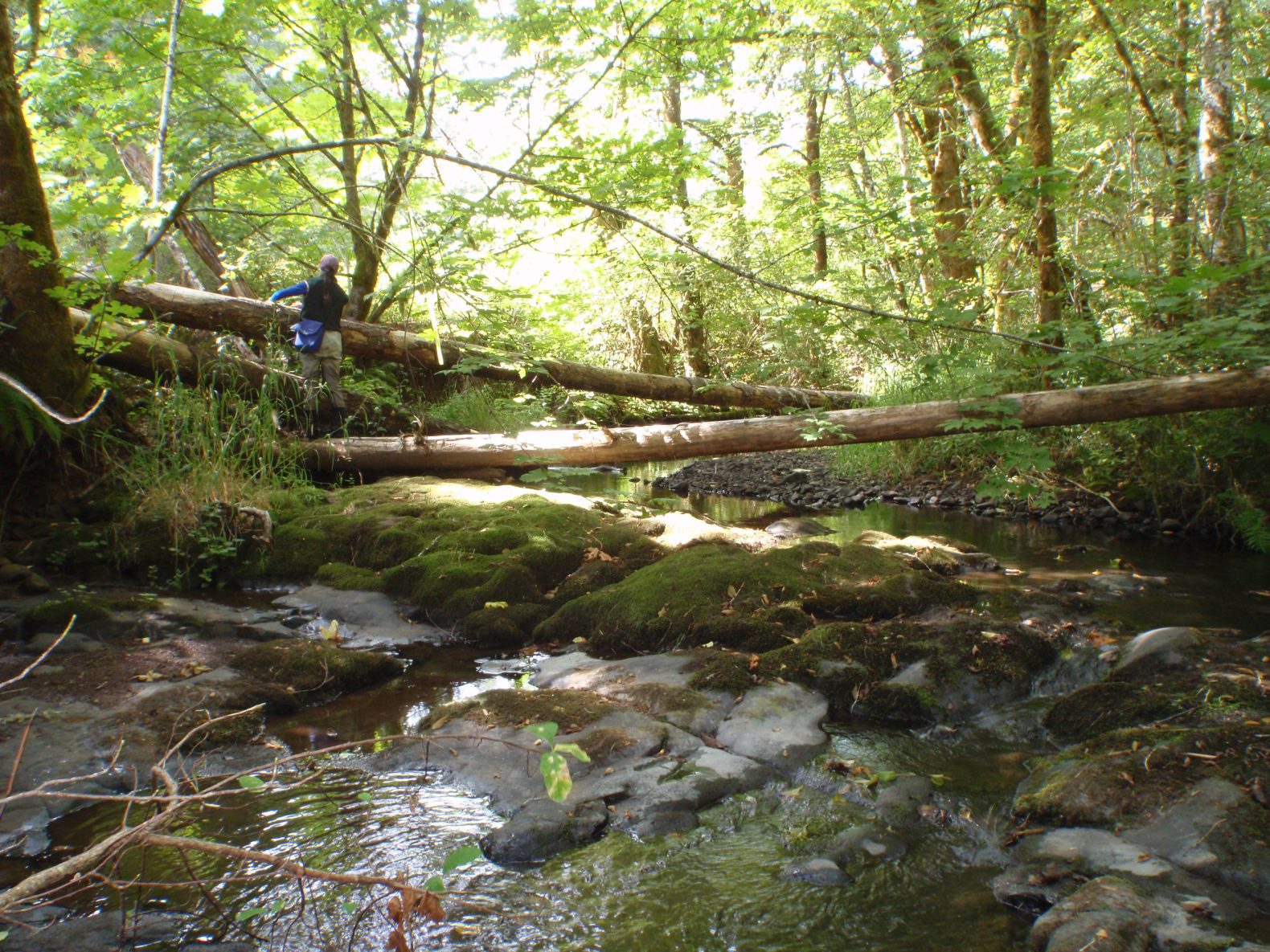
In 2006, Marys River Watershed Council replaced 8 fish passage barriers with adequately sized, accessible culverts. This opened passage to spawning tributaries and cold water refuge during elevated summer stream temperatures.
Large Woody Debris
Wood removal in and near Willamette Valley streams during the region’s development drastically changed their character and quality as wildlife habitat. Large woody debris structures provide wildlife habitat by redirecting water flow to scour and redeposit gravel and silt on the streambed. This creates deep pools, slow pockets, and riffles that fish and other aquatic organisms need to thrive. When streams lose wood, aquatic habitat unravels, leaving behind exposed bedrock and fast-moving water. In streams without large wood, aquatic species have less space to shelter, forage, and spawn.
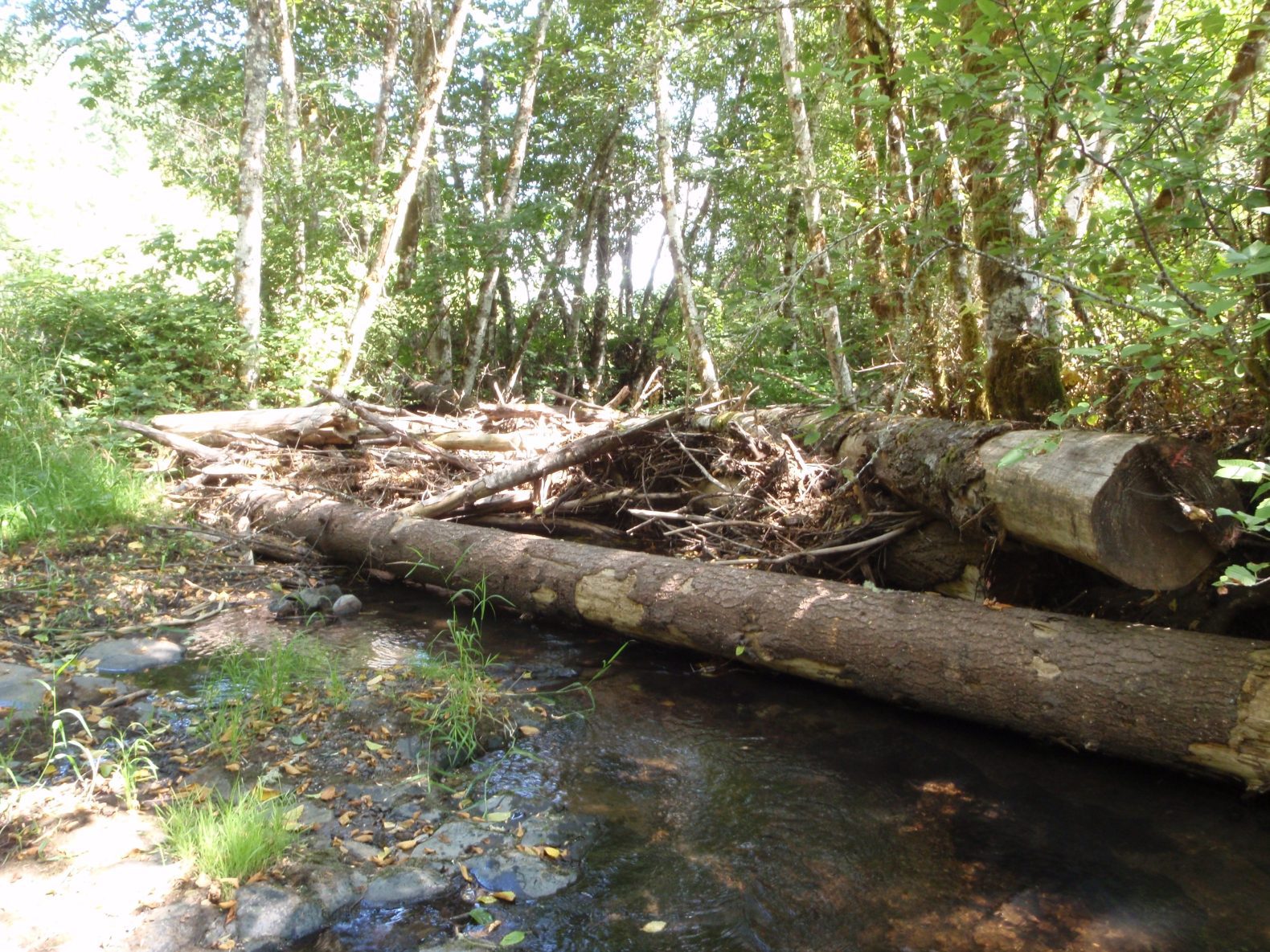
To replace the lost large woody debris in Woods Creek, the Watershed Council installed 30 large wood structures along 3 miles of the creek in 2008-09. We installed the woody debris structures on sections of the creek with exposed bedrock and areas where adding new wood would supplement existing habitat. Woods Creek neighbors noticed an immediate increase in the retention of materials in the structures during flooding, suggesting that new high-quality habitat was developing. Because large wood structures eventually begin to rot and age out, MRWC conducted a retreatment of Woods Creek in 2022 in order to retain the gains made in the previous large wood treatment. We added new logs to 15 structures installed in the earlier placement. This retreatment will retain the channel aggradation and floodplain connection established with the first log placements for years to come.
Side Channel Reconnection and Alcove Construction
In 2008 as part of an extensive in-stream restoration project, MRWC successfully reconnected five off-channel alcoves to provide slow water rearing refuge habitat during high winter slows.
Riparian Planting
The Watershed Council planted Western red cedar trees and other native streamside vegetation along 1000 feet of deforested streambank as part of the initial project. These trees will become a source of new large woody debris in the creek and prevent erosion as they mature. With the trees having become well established, MRWC planted native understory plants in 2023 to provide improved riparian vegetation structure and habitat and to mitigate against invasive plants colonizing the understory.
Pond Outlet Retrofit
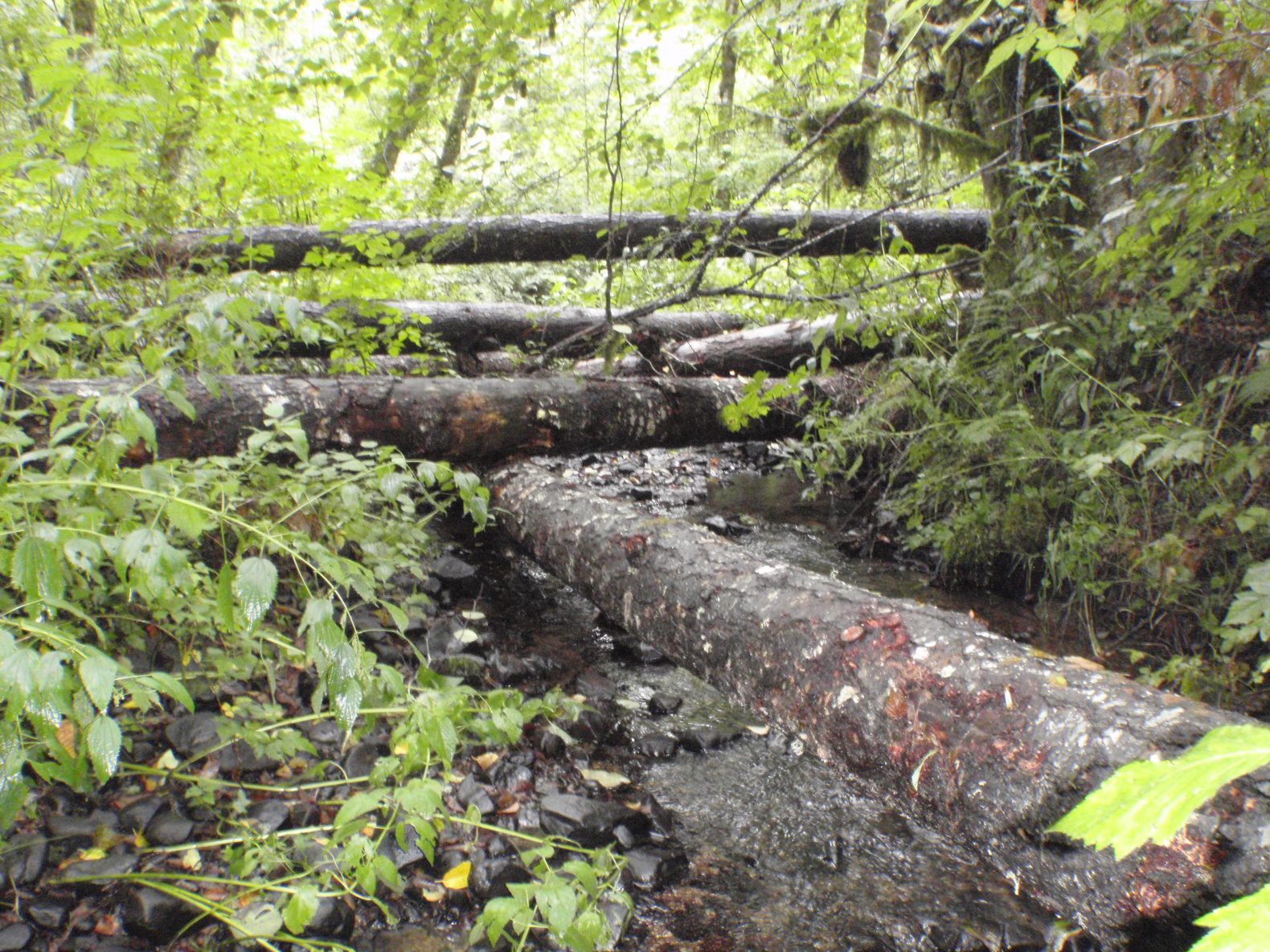
In 2008, MRWC also addressed a pond that discharged warm water into Woods Creek limited the positive impact of our in-stream and riparian restoration work. The pond’s surface temperature would approach levels lethal to salmonids during the summer. The surface outlet of the pond flowed into and heated Woods Creek dramatically. To address the problem, the Watershed Council installed a new outflow that released water from deeper depths where the water is colder. Using the new outflow decreased average water temperatures coming out of the pond to lower than average stream temperatures.