Marys River In-Stream Restoration
The Upper Marys sub-basin is generally a lower gradient system with a legacy of beaver presence. Historically, these sections of the watershed provided flood and drought mitigation, water filtration, and water cooling. Beaver removal and channelization removed these benefits for downstream communities and decreased in-stream habitat quality. Water temperatures were impacted mostly due to the loss of water impoundment and groundwater recharge for slow cold water summer releases. Working to recover system processes in the Upper Marys, the Watershed Council installed beaver dam analogs, reconnected side channels and off-channel alcoves, installed large wood structures, addressed fish passage concerns, and conducted riparian planting to enhance two tributaries in the Upper Marys. These treatments complement each other to create high-quality habitat for aquatic and riparian species, addressing the primary challenge of elevated summer stream temperatures.
The Watershed Council received support from our partners at the Oregon Watershed Enhancement Board, the Marys Peak Stewardship Group of the Siuslaw National Forest, the Confederated Tribes of Siletz Indians Forest Product Request program, Benton County Public Works, Aggregated Resources, Hull Oakes Lumber Company, and a number of other private landowners. This restoration project benefits native aquatic species like beaver, cutthroat trout, and Pacific lamprey.

In-stream Wood Treatments: Beaver Dam Analogs and large Wood Structures
The Upper and Middle Marys were historically beaver-dominated ecosystems. Beavers created low-gradient pond complexes that slowed and spread water. Species like cutthroat trout and Pacific lamprey use beaver complexes as habitat. Early landowners in the watershed trapped beavers and removed dams to develop land in the floodplain, and logged riparian trees. These land use activities led to incised and simplified streams that provide fewer benefits for nearby ecosystems and downstream communities. In some locations, the Watershed Council chose to install beaver dam analogs made by weaving tree branches into posts driven into the streambed. The structures mimic the effects of beaver dams, slowing the water and increasing floodplain inundation which can create conditions that encourage beavers to move in and maintain the structures. In other locations where the stream hydrology was higher, MRWC installed large wood structures to create more frequent floodplain interaction.
Watershed Council staff identified Devitt Creek and the West Fork Marys River as restoration priorities in the Upper Marys basin because of their salmonid habitat potential and conditions suitable for beaver recolonization. These new structures will engage the floodplain, and reestablish some of the historic beaver dam complex habitat to address concerns about high summer stream temperatures and negative impacts from stream channel simplification.
Side Channel and Alcove Reconnection
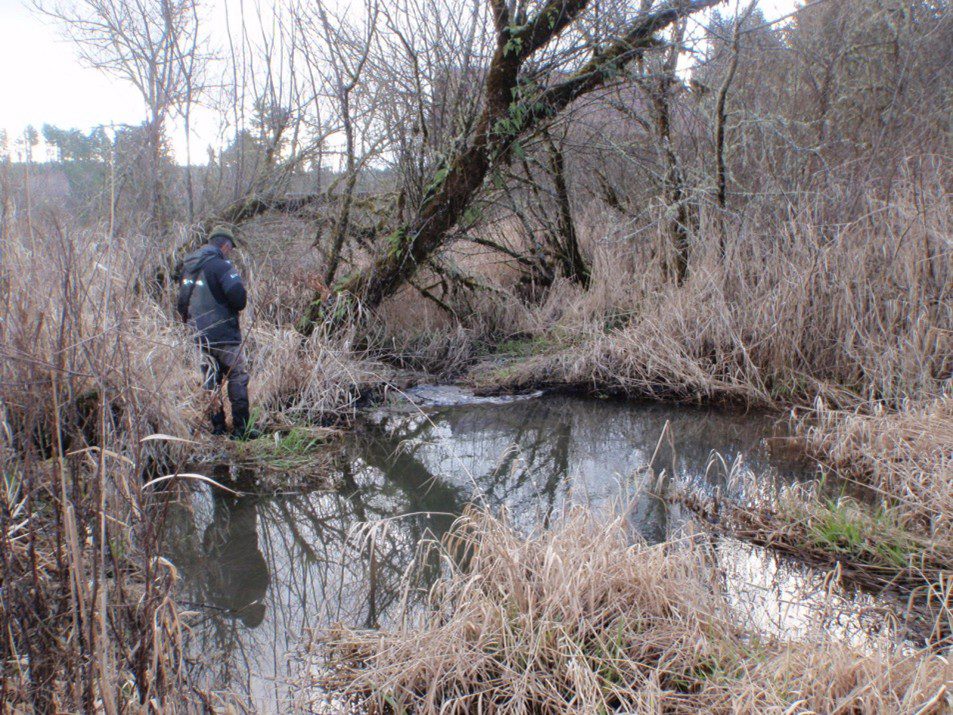
Beaver removal in the Willamette Valley disconnected streams from their floodplains. Historically, water would have formed meandering and branching channels across the Marys River floodplain. Researchers have found that side channels and alcoves provide thermal refugia to native fish species and amphibians by maintaining different water temperatures than the mainstem river. This would have provided habitat for diverse species and mitigated the impacts of extreme flood and fire events. After beaver removal, high-velocity channels dug into soft alluvial sediments and created deeply incised and erodible banks. This decreased habitat quality and increased environmental risk.
The Watershed Council reconnected historic side channels and alcoves to the river. Side channel and alcove reconnection projects remove barriers to the floodplain. Reconnected floodplains allow more water to be absorbed into the ground, which mitigates flood damage. Alongside the floodplain reconnection, the Watershed Council installed 10 large woody debris structures and planted over 3 acres of riparian trees. These actions help increase the complexity and resilience of the floodplain. Native aquatic and riparian species benefit from these improved conditions.

Fish Passage
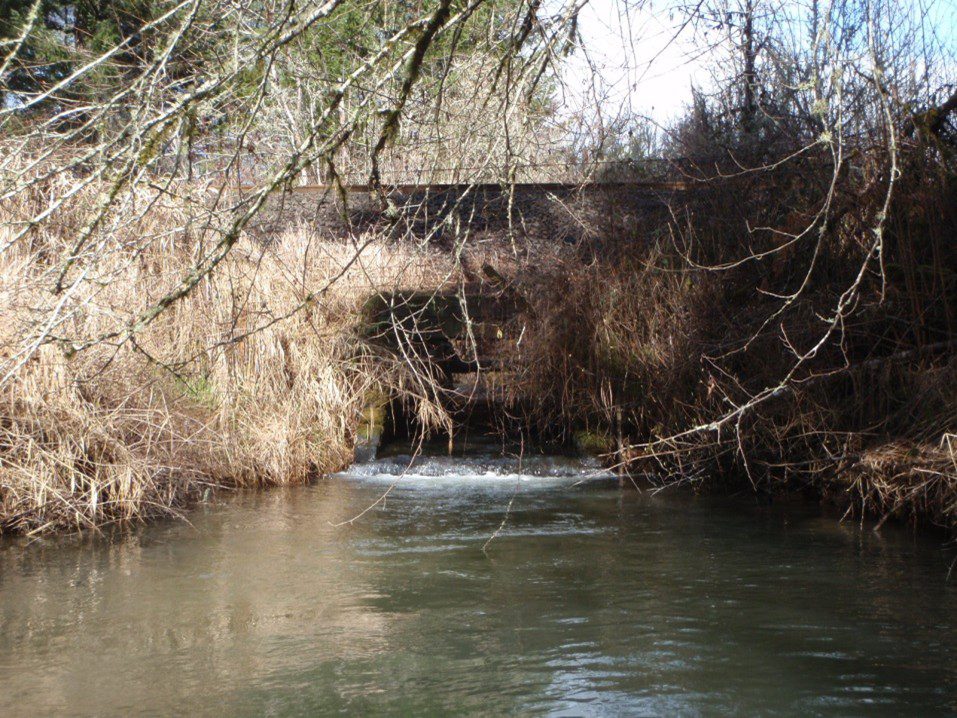
The effectiveness of Marys River restoration work in providing and enhancing habitat for migratory aquatic species could be limited by fish passage barriers in the upper watershed. The upper reaches of most streams in the Marys River watershed contain high-quality spawning and summer refugia habitat. Removing fish passage barriers allows fish species to move to these high-quality and recovering habitats. Watershed Council staff identified 4 fish passage barriers to remove, including undersized and rotting culverts, a collapsed irrigation dam, and a perched railroad culvert.
As part of this project, these fish passage barriers were mitigated with graded rock riffles to lift the channel or replaced. The Watershed Council reestablished fish access to 5.6 miles of in-stream habitat by addressing the fish passage barriers. Now native aquatic organisms are able to access this high-quality habitat. The removal of these barriers helped maximize the positive impact of our nearby system recovery projects.